
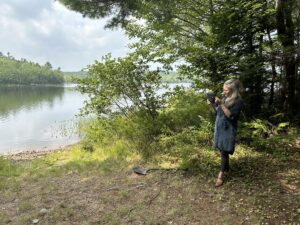
PERTH, ON — September 25, 2025 Watersheds Canada, a national freshwater conservation charity, has launched a new Climate Resiliency Report generator through their award-winning The Natural Edge shoreline restoration program. The new report generator will allow for locally-specific resources and stewardship action plans to be at the fingertips of those hard-hit by the impacts of climate change: waterfront communities. To ensure this new Climate Resiliency Report generator tool is ... Read More
Cyanobacteria and Public Health
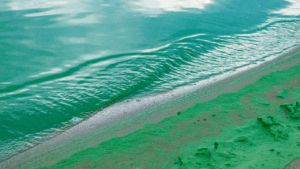
by Paige Jessup, Climate Change Resiliency Intern Despite its name, blue-green algae is not actually algae - it is a type of bacteria called cyanobacteria that lives in fresh and marine water. Most species of cyanobacteria are unicellular and photosynthetic, meaning they use sunlight to produce their own food. Blue-green algae can reproduce rapidly in warm, slow-moving, nutrient rich environments. In the right conditions, these bacteria will rapidly reproduce and cause a bloom, spreading ... Read More
New Marginal Lands Initiative Offers Up to 90% Funding for Farmers // La nouvelle Initiative pour les terres marginales propose aux agriculteurs un soutien financier pouvant aller jusqu’à 90 %
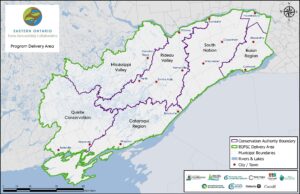
New Marginal Lands Initiative Offers Up to 90% Funding for Farmers September 23, 2025 -- The Eastern Ontario Farm Stewardship Collaborative—which brings together Watersheds Canada, Conservation Authorities, Ducks Unlimited Canada, Forests Canada, Just Food, and other partners—is proud to launch the Resilient Agricultural Landscape Program (RALP) – Marginal Lands Initiative. This new funding opportunity will support farmers and rural landowners in implementing on-the-ground projects that ... Read More
Media Release – Lake Trout and Walleye Spawning Beds Restored Across Central-Eastern Ontario
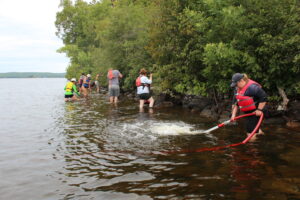
September 16, 2025 - Watersheds Canada’s Fish Habitat team is delivering a series of spawning bed restoration projects this fall to promote the population growth of declining lake trout and walleye populations across Central-Eastern Ontario. After two projects in early September, the organization is now looking ahead to two more: one in a lake north of Kingston, and the other just south of Algonquin Park. These projects are delivered in partnership with lake communities that have identified a ... Read More
Resources for Property Owners
Watersheds Canada's education toolkit about septic systems: https://watersheds.ca/septics Septic System Basics for Homeowners: https://www.youtube.com/watch?v=04ZIjz8kAPw This video addresses the basics of how a septic system functions and provides best maintenance practices for homeowners. FOCA Cottage Country Septic System: https://www.youtube.com/watch?v=ix9nbF8qUrA In this video made by Federation of Ontario Cottagers’ Associations guides you through all the ... Read More
History of Cyanobacteria (Blue-Green Algae) in Canadian Waters
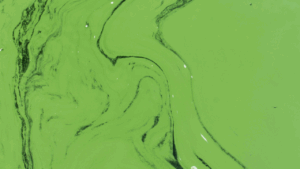
by Paige Jessup, Climate Change Resiliency Intern Cyanobacteria, or “blue-green algae”, are one of the old living organisms on earth, evolving from a group of microbes approximately 2.7 billion years ago. Cyanobacteria are thought to be the cause of one of Earth's mass extinctions called “The Great Oxygenation Event” which took place between 2.4-2.1 billion years ago and wiped out almost all life on earth (Aiyer, 2022). Cyanobacteria survived this extinction and eventually went through a ... Read More
The Consequences of Cyanobacteria on Freshwater Ecosystems
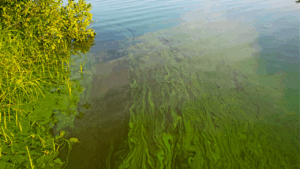
by Paige Jessup, Climate Change Resiliency Intern Cyanobacteria, also known as blue-green algae, is one of the oldest living organisms on earth and are generally unicellular. These organisms are photosynthetic and require sunlight, water, and nutrients such as nitrogen and phosphorus to reproduce. Due to current land use practices along Canada's shorelines, humans are opening up these organisms to these perfect conditions they need to reproduce each year and also to reproduce earlier in the ... Read More
Winter Spawning Bed Restoration Project Nominated for 2025 Water Canada Awards
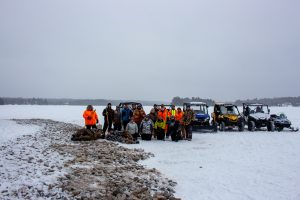
Watersheds Canada is thrilled that one of their Fish Habitat projects is a finalist for the ‘Conservation: Small Project Award’ category in the 2025 Water Canada Awards. This annual award ceremony recognizes people, projects, and technologies that demonstrate a strong commitment to improving the state of Canadian freshwater. Their ‘Conservation: Small Project Award’ category honours small-scale projects that enhance up to 2 hectares of watershed, making Watersheds Canada’s Fish Habitat ... Read More
Lake-Friendly Pool or Hot Tub Alternatives
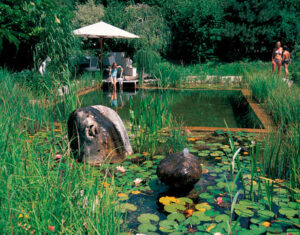
by Paige Jessup, Climate Resilience Intern There are a lot of concerns when it comes to standard pools and hot tubs, such as their cost and health impacts. What about their environmental impacts? Most hot tubs and pools contain chlorine, bromide, salt, and algaecides which can be harmful to the environment, especially when not disposed of properly. Ultraviolet Light A great alternative to chlorine is ultraviolet light in conjunction with hydrogen peroxide which has been shown to be very ... Read More
Cyanobacteria – Public Perception and Awareness Survey
... Read More
- « Previous Page
- 1
- 2
- 3
- 4
- 5
- 6
- …
- 22
- Next Page »