
by Andres Clavier, Freshwater Stewardship Education Intern
Planting Around Your Septic System
Septic systems are integral to many homes, particularly those not connected to municipal sewage systems. While they are vital in managing household waste, landscaping over septic systems can be a tricky challenge. It is important to choose the right kinds of native plants for planting over your septic system, and equally as important, to know which plant species to avoid and plant further away. Selecting the correct plant species is an important supportive step in addition to regular septic maintenance.
Choosing the Right Plants for Your Septic System
Not all plants are friendly to your septic system. Ideal plant selections are those with shallow, non-invasive roots, and low water needs as they are less likely to damage the components of your system. These can include various grasses and wildflowers native to your region. For example, suitable options for much of Canada’s hardiness zones could be Switchgrass (Panicum virgatum) or Purple Coneflower (Echinacea purpurea). Learn more about suitable species for your area by using our free Canada-wide Native Plant Database.
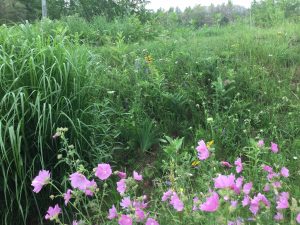
This septic bed features a variety of plants.
Trees and shrubs, with their more aggressive, deep root systems, are generally best avoided near a septic system. Notorious for seeking out water sources, these plant roots can cause significant damage to your septic system’s drain field. Common culprits include Willow trees (Salix spp.), Poplar trees (Populus spp.), and various species of Maple trees (Acer spp.). When choosing a spot to plant these deep rooted species, be sure to plant them well away from your septic system to prevent possible damage.
The Importance of Septic Maintenance
Regardless of your landscape choices, regular septic maintenance is critical. Maintenance not only ensures the longevity of your system but also protects your local environment from untreated wastewater. Regular maintenance includes pumping your septic tank every 3-5 years (depending on usage) to remove solid waste build-up. Additionally, practices such as minimizing water use, avoiding flushing all non-waste items (such as wipes), and regular inspections can significantly improve the lifespan of your septic system. Proper septic care is not just about preventing costly repairs. Septic systems that are not well-maintained can lead to groundwater contamination, negatively affecting local ecosystems and potentially posing health risks.
In conclusion, when landscaping over your septic system, choose plants with care – opt for shallow-rooted, drought-tolerant species, and avoid those with invasive roots. Remember that the secret to a healthy septic system, and by extension a healthy home and environment, lies in regular and careful maintenance.
Disclaimer: This blog provides general advice, but the suitability of specific plants may depend on local conditions and septic system design. Always consult with a local expert or septic system professional before making landscaping decisions related to your septic system. If you are interested in restoring your shoreline property with native plants, please contact our team for more information about our program, The Natural Edge.
Sources
Day, S. D., & Silva, E. (2022). Planting on your septic drain field. Virginia Cooperative Extension. https://extension.umd.edu/sites/extension.umd.edu/files/2022-04/Planting_septic_vaext.pdf
Fetter, J. R., Hurd, G., & Galford, A. (2023). Managing your on-lot septic system. PennState Extension. https://extension.psu.edu/managing-your-on-lot-septic-system
Green Building Canada. (2024). Important things homeowners need to know about septic tank maintenance. https://greenbuildingcanada.ca/septic-tank-maintenance/
Ontario Association of Sewage Industry Services. (2024). Septic care. https://oasisontario.on.ca/septic-care/
Ontario Ministry of Agriculture, Food and Rural Affairs, & Rideau Valley Conservation Authority. (2022). Septic smart! Understanding your home’s wastewater system. https://www.ontario.ca/files/2022-10/omafra-septic-smart-understanding-home-wastewater-system-en-2022-10-14.pdf
United States Environmental Protection Agency. (2024). How to care for your septic system. https://www.epa.gov/septic/how-care-your-septic-system
This blog post is part of a series generously funding by the Government of Canada’s EcoAction Community Funding Program, and a project delivered in partnership with Crowe Valley Conservation Authority.