
by Jonathan Miller, Freshwater Conservation Intern
As a province dominated by its natural freshwater systems, much of Ontario’s economy and wildlife have been shaped by these aquatic environments and thus rely on them. Ontario’s rivers and lakes are the cornerstone of many of our most vital ecosystems. They provide us with countless economic benefits, leaving us intrinsically linked to them. Our water cycle is changing, and as droughts become more common, it’s essential that we are equipped to navigate the issues these problems present.
Water scarcity is not a new problem in Ontario, but it is a growing one. Overuse and contamination of our freshwater resources have led to a steady decrease in their availability (Watters, 2019). As Ontarians, we assume we have an abundance of freshwater resources, but this might not always be the case. Our policies surrounding source water protection need a radical shift, or we may face a freshwater deficit.
Understanding why water scarcity occurs and what we can do to address it is critical to protecting our freshwater systems. The question is, are we up to the challenge?
What is Water Scarcity?
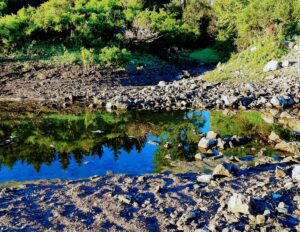
Water scarcity occurs when water availability is insufficient to meet both ecological and human demands for an extended period. In Ontario, this typically means a combination of factors like reduced streamflow, declining groundwater levels, stressed wetlands, and increased competition among water users (Watters, 2019). Southern Ontario, in particular, is vulnerable due to its high population density, intensive agriculture, and reliance on surface and groundwater sources that are sensitive to prolonged dry conditions (Watters, 2019).
Causes and Impacts
Water scarcity affects far more than just our water levels alone. When lakes and rivers run low, the impacts ripple through natural systems and communities alike. There are many natural and human causes for water scarcity. A primary cause is climate change. Over time, there has been an increasing variability in precipitation patterns across Canada, including Ontario. While the total annual precipitation may not decline, longer dry periods between those rainfall events and increased evaporation during summers reduce water availability (Mortsch et al., 2015). Earlier snowmelt also contributes to lower summer baseflows in rivers and streams.
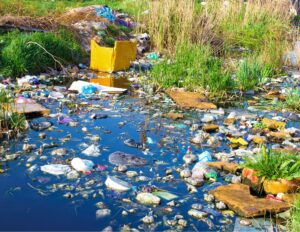
High water usage for agriculture, industry, and municipalities can further exacerbate low-water conditions. During dry periods, our normal water use can be too much, pushing water systems beyond their ecological thresholds (Disch et al., 2012). Finally, urbanization and the loss of wetlands reduce the environment’s ability to store and slowly release water, making watersheds more vulnerable to drought (Watters, 2019). The contamination of our water resources through anthropogenic means is diminishing our fresh water supply and available habitat for aquatic species, reinforcing the importance of watershed protection.
The Low Water Response
Administered by the Ministry of Natural Resources and Forestry, the Ontario Low Water Response (OLWR) was created as a method of preparing Ontarians for droughts and water scarcity while also limiting their damaging effects. The program is designed to provide early warning of emerging low-water conditions and to support coordinated, community-based responses (Ontario, 2024).
The OLWR uses environmental indicators such as precipitation, streamflow, groundwater levels, soil moisture, and water supply conditions to assess water availability. Based on these indicators, conditions have been classified into three escalating levels:
- Level I: Early signs of water stress; voluntary water conservation is encouraged.
- Level II: Increasing impacts on water users and ecosystems; coordinated conservation and management actions are recommended.
- Level III: Significant water shortages; mandatory restrictions may be required to protect essential uses and ecological health (Ontario, 2024).
Water response teams are local groups usually composed of conservation authorities, municipalities, Indigenous communities, and provincial staff responsible for condition evaluation and enacting action. The program has been commended for increasing community-based awareness and stewardship for water scarcity, while it’s time to respond as well as its enforcement have received criticism (Disch et al., 2012).
How to Conserve Water At Home?
Water conservation is one of the most effective methods we have for reducing the severity of low-water conditions. Household actions such as limiting outdoor watering, collecting rainwater, and simply changing the mindset to reduce usage can collectively reduce demand during periods of need. In agricultural and municipal contexts, the improvement of irrigation efficiency, timing low usage to peak stress periods, and the protection of natural water storage features such as wetlands and riparian areas can significantly enhance water security (Disch et al., 2012; Watters, 2019).
The growing challenge of water scarcity is best fought together. The protection of our aquatic environments ensures we have enough freshwater to sustain our economy and Ontario’s natural environments. Check out our Flooding and Water Scarcity page to learn more.
References
Disch, J., Kay, P., & Mortsch, L. (2012). A resiliency assessment of Ontario’s low-water response mechanism: implications for addressing management of low-water under potential future climate change. Canadian Water Resources Journal/Revue canadienne des ressources hydriques, 37(2), 105-123.
Mortsch, L., Cohen, S., & Koshida, G. (2015). Climate and water availability indicators in Canada: Challenges and a way forward. Part II–Historic trends. Canadian Water Resources Journal/Revue canadienne des ressources hydriques, 40(2), 146-159.
Ontario. (2024). Ontario Low Water Program. https://www.lioapplications.lrc.gov.on.ca/webapps/swmc/low-water-response/
Watters, A. (2019). Freshwater Scarcity: The Current Situation in Southern Ontario.
This resource is part of an education toolkit generously funded by: