
by Jonathan Miller, Freshwater Conservation Intern
Floods and droughts are responsible for widespread damage to homes and our local economies each year. Changing precipitation patterns and increasing temperatures brought on by climate change alongside expanding urban development are intensifying the risk of both floods and water scarcity (Quagliolo et al., 2023; Watters, 2019).
While large-scale infrastructure and policy implementation are essential, individual homeowners can also take low-cost actions to improve their properties’ resilience to flooding and drought conditions. Many of these actions end up aligning with nature-based solutions and Low Impact Development principles, offering protection while also delivering long-term environmental benefits (Huang et al., 2020).
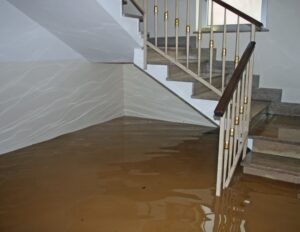
Flood Actions
Flood resilience at the household level focuses on slowly and safely directing stormwater away from buildings. Small changes made across many properties can collectively reduce neighbourhood flood risk and pressure on municipal stormwater systems (Quagliolo et al., 2023).
Rain gardens are shallow, vegetated depressions designed to collect runoff from roofs, driveways, and paved surfaces. They allow water to infiltrate into the soil slowly, reducing surface runoff and peak flows that contribute to pluvial flooding (Quagliolo et al., 2023). Rain gardens are particularly effective during frequent, moderate storms, which account for most annual rainfall events in places like Ontario (Huang et al., 2020).
Redirecting downspouts away from foundations and storm drains allows water to soak into lawns, gardens, or rain gardens instead of flowing directly into sewer systems. This simple action can significantly reduce basement flooding risk during intense rainfall events (Government of Canada, 2025).
Planting native vegetation and improving soil structure through composting increases infiltration and water storage capacity. Healthy soils absorb rainfall more effectively than compacted turf or bare ground, helping to slow runoff and reduce erosion around homes (Huang et al., 2020). Finally, rain barrels capture roof runoff and temporarily store it for later use. By intercepting rainfall before it enters storm drains, rain barrels help reduce runoff volumes during heavy rain events and lower the risk of flooding.
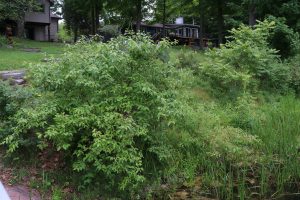
Drought Actions
At the same time, periods of low rainfall and high evaporation are also becoming more common in parts of Canada, increasing pressure on surface water and groundwater supplies (Watters, 2019). Household drought resilience focuses on conserving water, improving household appliance efficiency, and retaining moisture in landscapes.
Stored rainwater from barrels or cisterns can be reused for outdoor watering during dry periods, reducing demand on municipal water supplies. This approach supports both flood mitigation and drought resilience by managing water across extremes (Huang et al., 2020).
Replacing high-water-demand lawns with native, drought-tolerant plants reduces outdoor water use while maintaining healthy green spaces. Native plants are adapted to local climate conditions and typically require less irrigation once established (Watters, 2019). This makes them an environmentally conscious choice for both drought resiliency and habitat improvement on your property.
Water-efficient appliances and low-flow fixtures can significantly reduce indoor water use. These measures are especially important during drought conditions and align with federal preparedness guidance for reducing household water demand (Government of Canada, 2025).
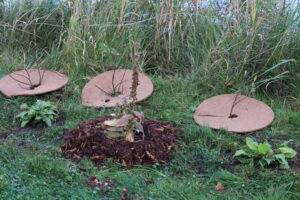
Finally, applying mulch to gardens and planting beds helps retain soil moisture and reduce evaporation, which will improve plant resiliency during dry periods. Improved soil organic matter also enhances long-term water storage capacity (Huang et al., 2020).
Building Resiliency
Low-cost household actions, when implemented widely, play an important role in strengthening community resilience to both flooding and drought. By managing water where it falls and using it more efficiently and intentionally, homeowners can reduce risks to their properties while contributing to healthier watersheds and more sustainable urban systems (Quagliolo et al., 2023; Huang et al., 2020).
When used widely, these household actions not only help protect your property, but also our freshwater ecosystems. Flooding and drought conditions are exacerbated by water overuse and urbanization. It’s our collective responsibility to help mitigate these issues accordingly.
For more information on the topic of water scarcity and flooding, please visit our Flooding and Water Scarcity page and feel free to share this information with others in your community.
References
Huang, Y., Tian, Z., Ke, Q., Liu, J., Irannezhad, M., Fan, D., … & Sun, L. (2020). Nature‐based solutions for urban pluvial flood risk management. Wiley Interdisciplinary Reviews: Water, 7(3), e1421.
Government of Canada. (2025, September 12). Get prepared. https://www.canada.ca/en/services/policing/emergencies/preparedness/get-prepared.html
Nottawasaga Valley Conservation Authority. Low Impact Development (LID). https://www.nvca.on.ca/low-impact-development/
Quagliolo, C., Roebeling, P., Matos, F., Pezzoli, A., & Comino, E. (2023). Pluvial flood adaptation using nature-based solutions: an integrated biophysical-economic assessment. Science of The Total Environment, 902, 166202.
Watters, A. (2019). Freshwater Scarcity: The Current Situation in Southern Ontario.
This resource is part of an education toolkit generously funded by: